Got outside today.
And how awesome was it?
Pretty awesome.
I set up a group ride for the multisport club today, since we haven't been able to do a group ride all together yet and the forecast was for a high of 56 F with 10 MPH winds (that would translate to warm and calm, for those of you fortunate to live in sunny, warm, less windy climates). Only one of my ladies showed up, but that was fine. She's very chatty, and a lot of fun to ride with. The wind was from the west by northwest, mostly around 10-15 MPH, but gusting to more than that, I think. We started out riding north for about 10 miles, then did a little loop around Furley, KS (now if I meet any of the 80 people who live there, I can say, "Furley? I know where that is! Yeah, I like to ride around there). And it was a really, really little loop. Like less than 2 miles. Then we headed east for 4 miles, the wind at our backs the whole way (and downhill for most of it, to boot). That little jog east was amazing. Even going up the hills, our speed never dropped below 20 MPH. Of course after all that wonderfulness, we had to turn back around and ride uphill into the wind. We did some quick arithmetic, and found it amusing that the speed of the wind was forecast for 13 MPH, which is approximately how much slower we rode heading west. We finished with the 10 miles south towards Wichita, once again with the wind at our backs. We probably averaged 16 MPH, with a few stops for water and gel. All told, we went 32 miles and had a great time. It was an excellent day to be outside.
And so much better than being stuck on a trainer or spinning bike!
Saturday, February 9, 2008
Thursday, February 7, 2008
Domo Arigato, Mr. Tabata
Today was the first workout in a loooong time where I thought I was going to throw up, pass out, and/or die.
I went through a set of Tabata intervals for the first time, today. I did four intervals. I wanted to do six. I'm working up to eight (assuming I ever try this insanity again). And by the end of the second one, my body was trying so hard to slow down, I didn't think I could do a third, let alone a fourth.
But the workout only took twenty minutes, and by the end my throat felt raw (you know where you feel something like the metallic taste of blood) and I wanted to drape myself over my handlebars like a wet transition towel. I had to force myself to finish up the last five minutes of my cool down, because I wanted so badly to hop off the bike and curl up in the fetal position on the floor.
In short, it was an awesome workout.
I went through a set of Tabata intervals for the first time, today. I did four intervals. I wanted to do six. I'm working up to eight (assuming I ever try this insanity again). And by the end of the second one, my body was trying so hard to slow down, I didn't think I could do a third, let alone a fourth.
But the workout only took twenty minutes, and by the end my throat felt raw (you know where you feel something like the metallic taste of blood) and I wanted to drape myself over my handlebars like a wet transition towel. I had to force myself to finish up the last five minutes of my cool down, because I wanted so badly to hop off the bike and curl up in the fetal position on the floor.
In short, it was an awesome workout.
Wednesday, February 6, 2008
Locking it in
It's weird to transition so abruptly from one discipline to another.
One year ago, I was preparing to schedule a time for the GRE; I was looking at Yale, Stanford, Berkeley, asking professors about what graduate English programs might suit my skills and interests, and writing my senior thesis. I was almost positive that I would be going to grad school, or at the most taking a year or two off before continuing my studies.
To tell you the truth, I can't even remember exactly what or how everything changed . . . I remember being really sick of school. I remember being frustrated with L.A. and wanting to get out. I remember gradually falling in love with training and racing, mostly because of the awesome team with whom I was privileged to race. Whatever happened, I changed, and so did all my plans.
As a result, I've found myself very suddenly having to establish a professional image and ethos from scratch. I'm sure that all recent graduates go through this process; it just seems a bit riskier because the field in which I'm working isn't even remotely related to the field in which I built four years (well, probably more like two and a half) of expertise. Consequently, I can feel myself shifting and considering, weighing different considerations as I try to establish a philosophy for my coaching and teaching style. It's very much like starting to take some of your resistance work onto a wobble board or other stability tool; I can feel things shifting and changing as I try to find my equilibrium.
But along with that reflection on coaching ethos, I've also found myself thinking about my training goals, my process, my strengths, my weaknesses . . . the essence of my training. When my wanders as I swim or run, I find myself thinking about race goals and plans, where I should take my training in the next months, where I'll be in this sport in five years. Then I tell myself to focus on my form and stop thinking so damn much.
The questions remain after the workout, though. The primary realization I've come to, and the one I want to share here and now, is that I want to continue to focus on short-course racing. If you've been reading for a while, you know I've been considering--and had more-or-less decided to go ahead with--the 70.3 distance at the Las Vegas triathlon this year. I've changed my mind.
This will only be my third year racing. I don't come from a running/swimming/biking background, really, so the only long-term aerobic base I have has been built in the past two years. I'm still young; I can still demand a lot from my body. I am short, stocky, and muscular; I am built for short, intense bursts of speed, not sustained performance over 70.3 (or 140.6) miles. Taking all of that into account, I am 99% sure that Olympic distance and shorter is where I'm going to see the most success in racing. Could I make it through a half iron distance race? Absolutely! Would it take me eight hours or more? Yeah, in all honesty, it probably would.
I am young, in terms of my athletic career. I am also young in general :-). I want to be competitive, and I think that I can be if I work hard over the next several years. But it's not going to happen if I devote several months in this, my third season, to building enough base to make it through my first half ironman. At this point, I'd rather go fast than go long (I have years and years and years to build up to long course events!), which is why I will not be racing anything longer than Olympic distance this year.
Just like when I tell my bike classes to lock in perfect form before we start working hard, I'm locking in my coaching and training ethos. Which isn't to say that they won't change; after all, aren't we always looking for ways to improve our technique? But I hope that these ideas and decisions will carry me through the coming season with stability and purpose. And I'll share some more of my coaching ideas in the next few weeks, also.
Thanks for reading, guys!
One year ago, I was preparing to schedule a time for the GRE; I was looking at Yale, Stanford, Berkeley, asking professors about what graduate English programs might suit my skills and interests, and writing my senior thesis. I was almost positive that I would be going to grad school, or at the most taking a year or two off before continuing my studies.
To tell you the truth, I can't even remember exactly what or how everything changed . . . I remember being really sick of school. I remember being frustrated with L.A. and wanting to get out. I remember gradually falling in love with training and racing, mostly because of the awesome team with whom I was privileged to race. Whatever happened, I changed, and so did all my plans.
As a result, I've found myself very suddenly having to establish a professional image and ethos from scratch. I'm sure that all recent graduates go through this process; it just seems a bit riskier because the field in which I'm working isn't even remotely related to the field in which I built four years (well, probably more like two and a half) of expertise. Consequently, I can feel myself shifting and considering, weighing different considerations as I try to establish a philosophy for my coaching and teaching style. It's very much like starting to take some of your resistance work onto a wobble board or other stability tool; I can feel things shifting and changing as I try to find my equilibrium.
But along with that reflection on coaching ethos, I've also found myself thinking about my training goals, my process, my strengths, my weaknesses . . . the essence of my training. When my wanders as I swim or run, I find myself thinking about race goals and plans, where I should take my training in the next months, where I'll be in this sport in five years. Then I tell myself to focus on my form and stop thinking so damn much.
The questions remain after the workout, though. The primary realization I've come to, and the one I want to share here and now, is that I want to continue to focus on short-course racing. If you've been reading for a while, you know I've been considering--and had more-or-less decided to go ahead with--the 70.3 distance at the Las Vegas triathlon this year. I've changed my mind.
This will only be my third year racing. I don't come from a running/swimming/biking background, really, so the only long-term aerobic base I have has been built in the past two years. I'm still young; I can still demand a lot from my body. I am short, stocky, and muscular; I am built for short, intense bursts of speed, not sustained performance over 70.3 (or 140.6) miles. Taking all of that into account, I am 99% sure that Olympic distance and shorter is where I'm going to see the most success in racing. Could I make it through a half iron distance race? Absolutely! Would it take me eight hours or more? Yeah, in all honesty, it probably would.
I am young, in terms of my athletic career. I am also young in general :-). I want to be competitive, and I think that I can be if I work hard over the next several years. But it's not going to happen if I devote several months in this, my third season, to building enough base to make it through my first half ironman. At this point, I'd rather go fast than go long (I have years and years and years to build up to long course events!), which is why I will not be racing anything longer than Olympic distance this year.
Just like when I tell my bike classes to lock in perfect form before we start working hard, I'm locking in my coaching and training ethos. Which isn't to say that they won't change; after all, aren't we always looking for ways to improve our technique? But I hope that these ideas and decisions will carry me through the coming season with stability and purpose. And I'll share some more of my coaching ideas in the next few weeks, also.
Thanks for reading, guys!
It's Worth It Again!
I had my first real track workout in forever today. I didn't think I was going to get out and run, but decided to after fiddling around on the computer for an hour or so (also eating lunch). Here's what I did:
Warm up
1600, stride the straightaways on the second 800
Drills
High knees (fast, slow)
Hurdles
A skips, B skips
Kangaroo hops
Main set
4x800, 100 active rest in between
On each 800, sprint 100 at some point (fartlek)
Cool down
400 easy
And I stretched. Since I'm in my second base building mesocycle and I'm starting to incorporate more serious intervals (instead of just concentrating on form), I wanted to get back on an outdoor, 400 meter track. The 11-lap-to-a-mile indoor track at the gym was making me crazy, and I don't want to run on the treadmill. So outdoors it was, off to good ol' Clearwater High. There was some snow and ice on the track, but the temperature wasn't too bad, somewhere right around freezing with very light wind (6 MPH).
In summary, the workout was awesome, and I'm so glad that I got out of the house for an afternoon workout. It was totally worth it.
Warm up
1600, stride the straightaways on the second 800
Drills
High knees (fast, slow)
Hurdles
A skips, B skips
Kangaroo hops
Main set
4x800, 100 active rest in between
On each 800, sprint 100 at some point (fartlek)
Cool down
400 easy
And I stretched. Since I'm in my second base building mesocycle and I'm starting to incorporate more serious intervals (instead of just concentrating on form), I wanted to get back on an outdoor, 400 meter track. The 11-lap-to-a-mile indoor track at the gym was making me crazy, and I don't want to run on the treadmill. So outdoors it was, off to good ol' Clearwater High. There was some snow and ice on the track, but the temperature wasn't too bad, somewhere right around freezing with very light wind (6 MPH).
In summary, the workout was awesome, and I'm so glad that I got out of the house for an afternoon workout. It was totally worth it.
Monday, February 4, 2008
Beginners' Guide: 1-page Guide to Swimming
This is a compilation of everything I've read about proper swim technique, a synthesis, if you will. In the interest of exploiting your strengths and strengthening your weaknesses, I'll provide these guides, which I originally wrote for my multisport club at Genesis.
Head position: Look straight down, your nose pointing towards the pool floor, when you're practicing swimming. Your chin shouldn't be tucked or lifted, but held in a neutral position. Allow water to almost cover the back of your head; in other words, hide your head below the water. As you rotate from side to side, try to keep your face pointing at the pool bottom (except when breathing, of course).
Body Position: Always preserve a straight body line in the water; head, neck, shoulders, stomach, and hips should be in alignment, as though you have a steel rod passing from the crown of your head down to your hips. Don't allow your back to bow, or suck in your stomach too far. Press your lungs toward the bottom of the pool. Your lungs serve as a fulcrum for the rest of your body, so to get your body horizontal while swimming, you have to push extra hard on the head/torso end of the lever. The overall sensation should be one of swimming downhill. If your legs are low in the water, they will produce more drag (which means you'll go slower!) and pull you down, forcing you to spend extra energy by kicking in order not to sink. When swimming on your sides (or when rotating from side to side), focus on pushing your armpit down. Reach towards the pool wall immediately after your hand entry and before your catch (but not so far that your hips get out of alignment). Think about squeezing your body through the smallest hole possible.
Hand Entry: You swim with blades, not with fish. Your hand should slice into the water somewhere between your goggle line and a couple of inches in front of your head; they should not fully extend, then flop into the water. It is more efficient to finish extending your hand under water, rather than extending fully in the air. Your hand should enter directly in front of your shoulder, not at the center line of your body (i.e. in front of your head). Keep your arm from crossing over. Pinky should be highest of the fingers during entry.
Pull: Pull doesn't begin until just before your opposite hand enters the water. Don't let one arm sink as your opposite arm recovers (particularly as you breathe); one hand should always be extended in front of your body (this is called front quadrant swimming). Fingers of your hand should be together, thumb straight out to the side. Elbow should be higher than the hand at every point of the stroke. When initiating your pull, think of grabbing a handful of water, holding onto a chunk of “hard” water, or anchoring your hand and swimming past it. Use the rotational force of your hips and torso to pull yourself past your hand, rather than pulling your hand down towards yourself. Your hands should pull back past your hips, your thumbs brushing against your thighs as your hands exit the water. The last part of your stroke is a push back past your hips, not a pull up out of the water.
Recovery: Keep a high elbow throughout your recovery. Imagine that your elbow is attached to a puppet string that is pulling it up out of the water. Make sure that your whole arm is fully clearing the water with every stroke.
Breathing: Do not lift your head out of the water to breathe; raising your head will screw up your body position. Use a slow, controlled exhale throughout your stroke; do not (at any point) hold your breath. End your exhale before turning to the air to breathe. Every second of time you have your face exposed should be used to draw in air; don't waste it on finishing your exhale. Practice bilateral breathing (breathing to both the left and right side, not just to your dominant side) whenever possible by breathing every third or fifth stroke.
Kick: Avoid using an extra strong kick to make up for poor balance and body position in the water. Feet should stay just below the surface of the water, your heels barely kissing the air; you shouldn't be kicking up a lot of foam.
Head position: Look straight down, your nose pointing towards the pool floor, when you're practicing swimming. Your chin shouldn't be tucked or lifted, but held in a neutral position. Allow water to almost cover the back of your head; in other words, hide your head below the water. As you rotate from side to side, try to keep your face pointing at the pool bottom (except when breathing, of course).
Body Position: Always preserve a straight body line in the water; head, neck, shoulders, stomach, and hips should be in alignment, as though you have a steel rod passing from the crown of your head down to your hips. Don't allow your back to bow, or suck in your stomach too far. Press your lungs toward the bottom of the pool. Your lungs serve as a fulcrum for the rest of your body, so to get your body horizontal while swimming, you have to push extra hard on the head/torso end of the lever. The overall sensation should be one of swimming downhill. If your legs are low in the water, they will produce more drag (which means you'll go slower!) and pull you down, forcing you to spend extra energy by kicking in order not to sink. When swimming on your sides (or when rotating from side to side), focus on pushing your armpit down. Reach towards the pool wall immediately after your hand entry and before your catch (but not so far that your hips get out of alignment). Think about squeezing your body through the smallest hole possible.
Hand Entry: You swim with blades, not with fish. Your hand should slice into the water somewhere between your goggle line and a couple of inches in front of your head; they should not fully extend, then flop into the water. It is more efficient to finish extending your hand under water, rather than extending fully in the air. Your hand should enter directly in front of your shoulder, not at the center line of your body (i.e. in front of your head). Keep your arm from crossing over. Pinky should be highest of the fingers during entry.
Pull: Pull doesn't begin until just before your opposite hand enters the water. Don't let one arm sink as your opposite arm recovers (particularly as you breathe); one hand should always be extended in front of your body (this is called front quadrant swimming). Fingers of your hand should be together, thumb straight out to the side. Elbow should be higher than the hand at every point of the stroke. When initiating your pull, think of grabbing a handful of water, holding onto a chunk of “hard” water, or anchoring your hand and swimming past it. Use the rotational force of your hips and torso to pull yourself past your hand, rather than pulling your hand down towards yourself. Your hands should pull back past your hips, your thumbs brushing against your thighs as your hands exit the water. The last part of your stroke is a push back past your hips, not a pull up out of the water.
Recovery: Keep a high elbow throughout your recovery. Imagine that your elbow is attached to a puppet string that is pulling it up out of the water. Make sure that your whole arm is fully clearing the water with every stroke.
Breathing: Do not lift your head out of the water to breathe; raising your head will screw up your body position. Use a slow, controlled exhale throughout your stroke; do not (at any point) hold your breath. End your exhale before turning to the air to breathe. Every second of time you have your face exposed should be used to draw in air; don't waste it on finishing your exhale. Practice bilateral breathing (breathing to both the left and right side, not just to your dominant side) whenever possible by breathing every third or fifth stroke.
Kick: Avoid using an extra strong kick to make up for poor balance and body position in the water. Feet should stay just below the surface of the water, your heels barely kissing the air; you shouldn't be kicking up a lot of foam.
Sunday, February 3, 2008
Beginners' Guide: Finding Your Strength
Triathlon, I think, is an interesting sport in that many people come to it from a completely non-athlete background. So while every race you'll attend is full of naturally-born athletes who have been running/biking/swimming since they emerged from the womb, you'll also find a significant number of competitors for whom triathlon represented an end to a previously sedentary lifestyle.
For those of you who are just getting into triathlon from another sport, you probably already know your strengths; if you swam in high school, you're a strong swimmer; if you used to spend every weekend out on a mountain bike, cycling is probably a dominant sport; if you're a former cross-country runner, odds are that you prefer running to the other two disciplines. But if the last time you were physically active was seventh-grade gym class (or high school football in freshman year, if you're like me), figuring out your strengths will present more difficulty. It was difficult for me to determine what areas of triathlon performance I was best at, but now that I've processed that question, I'd like to share what I've discovered with you. My hope is that this post will help you to figure out what you're best at, so that you can maximize that strength as you prepare for competition.
To begin the process, take some time to think about which sport you enjoy the most. Even if it's not the area where you possess the greatest skill, the fact that you want to spend more of your time doing that sport will eventually make you better at that sport. That can work against you, too, you know. If you're a strong swimmer but a weak cyclist, and you spend all of your time swimming, you'll never improve as a triathlete. Because even though you might have the fastest swim split, the whole field is going to pass you on the bike. You have to exercise a little bit of caution with playing to your strengths, since there's no sense in making your strengths stronger while maintaining poor performance in two other sports. But when you're just starting out, why not go with practicing the discipline you like most, as long as you're not neglecting the other two?
Maybe you're strength isn't in a specific discipline, but in combining two disciplines. For example, you may be in the middle of the pack in a track workout, but can come straight off a two-hour bike ride and run like you're totally fresh. Or maybe you excel at staying calm during the swim, so that your heart isn't racing as you hop on your bike. A friend once told me (while reporting on a very successful race experience) that to be successful in triathlon, you have to be solidly mediocre in three sports. So even if you can't run the fastest mile split, if you excel at putting two sports together, your strength is one of the most important ones for successful triathlon competition.
What if there's no one sport that you can be fastest in, no sport you like the most, and you don't feel that you possess any extraordinary skill in putting swim and bike or bike and run together? That's the position I found myself in, as I was considering my strengths and how to exploit them. I'm steadily improving in every discipline, and have trained myself into the middle of the pack as a swimmer, cyclist, and runner. I spend the most time on the bike, but it's because that's a big part of my job (teaching spinning classes), not because I like it more. I feel like I enjoy each sport equally, and once I get started, I love the different elements of each discipline. So I was a little puzzled, at first, when I tried to determine whether I was strongest as a swimmer, biker, or runner.
Then I thought back to my performance at Shawnee Mission, in which I had an average swim, an average bike, and a sub-par run (so at least I know what my weakness was). I also had the the seventh-fastest overall T1 time and the fifth-fastest overall T2 time. So there you have it. My strength is not in swimming, biking, and running (although I may change that prognosis as I continue to develop and start to reach the peak of my fitness in each discipline), but in transitions--the one aspect of this sport where it takes the least pain to knock a couple minutes off of overall time. And even though, as I write it out, that seems absolutely ridiculous (I mean why couldn't my strength be in something a little more physical?!), I have to admit that I'm pretty proud of that.
The point is that we're all good at something. Figure out what you're best at and maximize your advantage in that area, while continuing to train your weakest points in order to grow evenly.
What are your strengths and weaknesses? Let me know in the comments!
For those of you who are just getting into triathlon from another sport, you probably already know your strengths; if you swam in high school, you're a strong swimmer; if you used to spend every weekend out on a mountain bike, cycling is probably a dominant sport; if you're a former cross-country runner, odds are that you prefer running to the other two disciplines. But if the last time you were physically active was seventh-grade gym class (or high school football in freshman year, if you're like me), figuring out your strengths will present more difficulty. It was difficult for me to determine what areas of triathlon performance I was best at, but now that I've processed that question, I'd like to share what I've discovered with you. My hope is that this post will help you to figure out what you're best at, so that you can maximize that strength as you prepare for competition.
To begin the process, take some time to think about which sport you enjoy the most. Even if it's not the area where you possess the greatest skill, the fact that you want to spend more of your time doing that sport will eventually make you better at that sport. That can work against you, too, you know. If you're a strong swimmer but a weak cyclist, and you spend all of your time swimming, you'll never improve as a triathlete. Because even though you might have the fastest swim split, the whole field is going to pass you on the bike. You have to exercise a little bit of caution with playing to your strengths, since there's no sense in making your strengths stronger while maintaining poor performance in two other sports. But when you're just starting out, why not go with practicing the discipline you like most, as long as you're not neglecting the other two?
Maybe you're strength isn't in a specific discipline, but in combining two disciplines. For example, you may be in the middle of the pack in a track workout, but can come straight off a two-hour bike ride and run like you're totally fresh. Or maybe you excel at staying calm during the swim, so that your heart isn't racing as you hop on your bike. A friend once told me (while reporting on a very successful race experience) that to be successful in triathlon, you have to be solidly mediocre in three sports. So even if you can't run the fastest mile split, if you excel at putting two sports together, your strength is one of the most important ones for successful triathlon competition.
What if there's no one sport that you can be fastest in, no sport you like the most, and you don't feel that you possess any extraordinary skill in putting swim and bike or bike and run together? That's the position I found myself in, as I was considering my strengths and how to exploit them. I'm steadily improving in every discipline, and have trained myself into the middle of the pack as a swimmer, cyclist, and runner. I spend the most time on the bike, but it's because that's a big part of my job (teaching spinning classes), not because I like it more. I feel like I enjoy each sport equally, and once I get started, I love the different elements of each discipline. So I was a little puzzled, at first, when I tried to determine whether I was strongest as a swimmer, biker, or runner.
Then I thought back to my performance at Shawnee Mission, in which I had an average swim, an average bike, and a sub-par run (so at least I know what my weakness was). I also had the the seventh-fastest overall T1 time and the fifth-fastest overall T2 time. So there you have it. My strength is not in swimming, biking, and running (although I may change that prognosis as I continue to develop and start to reach the peak of my fitness in each discipline), but in transitions--the one aspect of this sport where it takes the least pain to knock a couple minutes off of overall time. And even though, as I write it out, that seems absolutely ridiculous (I mean why couldn't my strength be in something a little more physical?!), I have to admit that I'm pretty proud of that.
The point is that we're all good at something. Figure out what you're best at and maximize your advantage in that area, while continuing to train your weakest points in order to grow evenly.
What are your strengths and weaknesses? Let me know in the comments!
Wednesday, January 30, 2008
Psyched Out
Here's a first: I'm already nervous about Wildflower.
Which is in May.
Whoo! This is gonna be an intense season!
Which is in May.
Whoo! This is gonna be an intense season!
Tuesday, January 29, 2008
Zen and the Art of Swimming -or- How to Turn that Frown Upside Down
I have never gotten a ticket.
The closest I've ever come to a vehicular citation was when some power-trippin' USC campus parking official cited me for "parking" my car in a no parking zone (never mind the fact that everyone stops there to pick people up, and I was clearly standing just a few yards away, waiting for a friend to come down from her dormitory). So when I got pulled over for running a red light (you ever spend a couple seconds looking directly at a yellow light without realizing it's yellow? Yeah, I don't think that should seem too extraordinary at 5:15 am), it didn't exactly make my day.
In fact, it totally sucked. I didn't want to go into the gym and teach my track workout, I didn't want to cry (and I was crying, as I pulled into the parking lot) in front of all the awesome athletes I coach, and I really, really didn't want to do my scheduled endurance swim.
I dragged myself into the locker room, changed grumpily into my swimming suit, and clomped out to the aquatics area like a sulking four-year-old. I kept telling myself that I didn't want to be there, I didn't want to swim, it's recovery week anyway so what will it matter if I skip my workout . . . I forced myself to climb into the pool, thinking, "Aw, man, it's gonna be so cold" (the pool is never cooler than 81 degrees), and reassured myself, bracingly, that it's a short workout this week and I would only be in the pool for 45 minutes or so.
Warmed up 100 swim, pull, kick. Drilled for 600 yards, which went by sooooo slowly. Then got into my main set: 3x300 time trial to establish a T-pace for my swim intervals, which I start incorporating hardcore next week.
And I worked my ass off on those intervals. Somewhere in that first 300, I zoned out and could only feel my legs and arms swishing through the water, my heart and lungs pounding to get oxygen out to my limbs. It didn't feel effortless, by any means, but it felt good. And by the end of that workout, I felt awesome, and I didn't really care that I got my first ticket ever.
Also, I swam my 300s in 5:35, 5:25, 5:35, which--if you'll remember that I was swimming my 200s in 4:15 last week--I felt really proud of.
The closest I've ever come to a vehicular citation was when some power-trippin' USC campus parking official cited me for "parking" my car in a no parking zone (never mind the fact that everyone stops there to pick people up, and I was clearly standing just a few yards away, waiting for a friend to come down from her dormitory). So when I got pulled over for running a red light (you ever spend a couple seconds looking directly at a yellow light without realizing it's yellow? Yeah, I don't think that should seem too extraordinary at 5:15 am), it didn't exactly make my day.
In fact, it totally sucked. I didn't want to go into the gym and teach my track workout, I didn't want to cry (and I was crying, as I pulled into the parking lot) in front of all the awesome athletes I coach, and I really, really didn't want to do my scheduled endurance swim.
I dragged myself into the locker room, changed grumpily into my swimming suit, and clomped out to the aquatics area like a sulking four-year-old. I kept telling myself that I didn't want to be there, I didn't want to swim, it's recovery week anyway so what will it matter if I skip my workout . . . I forced myself to climb into the pool, thinking, "Aw, man, it's gonna be so cold" (the pool is never cooler than 81 degrees), and reassured myself, bracingly, that it's a short workout this week and I would only be in the pool for 45 minutes or so.
Warmed up 100 swim, pull, kick. Drilled for 600 yards, which went by sooooo slowly. Then got into my main set: 3x300 time trial to establish a T-pace for my swim intervals, which I start incorporating hardcore next week.
And I worked my ass off on those intervals. Somewhere in that first 300, I zoned out and could only feel my legs and arms swishing through the water, my heart and lungs pounding to get oxygen out to my limbs. It didn't feel effortless, by any means, but it felt good. And by the end of that workout, I felt awesome, and I didn't really care that I got my first ticket ever.
Also, I swam my 300s in 5:35, 5:25, 5:35, which--if you'll remember that I was swimming my 200s in 4:15 last week--I felt really proud of.
Monday, January 28, 2008
Beginners' Guide: Setting Out
 My first few months of triathlon are a blur. I can't remember what the original impetus was that caused me to sign up for my first race. A few of my friends did races, which was my primary exposure to the sport; I watched a film at an Intervarsity Chrisfitan Fellowship retreat about Dick and Rick Hoyt; there was a girl in my songwriting class who was training with the USC Tri team . . . I think that all of those separate events combined to make me ask, "If they can do it, why not me?" So I browsed around online, found a race close (but not too close) to where I live, and told myself in my mind, "I'm gonna do it." How, then, do you get started in this sport? If you're an absolute, true beginner here's your first step: Find a race, and commit to doing it. Tell other people that you're shooting for that race. Register and start making travel plans. Invest time and money in making that race a reality for you. The more real you can make it in your mind, the more likely you'll be to work hard to get there.
 Practicals
Well, Jamie, that's all well and good. But what exactly do I do?! Never fear, grasshopper; just ask yourself a few questions . . .
- What distance race are you going to do? Figure out your weakest sport (for most people, it's swimming), and decide how far you'll be able to go by the time your race rolls around. That's the upper limit of your racing distance. For example, when I first started out to do a triathlon, I couldn't swim. I had to take a swim class so that I wouldn't drown. I couldn't swim 50 yards without stopping. But I was pretty sure that I would be able to swim at least 800 yards straight by the summer. So I looked for a race that had a swim of 800 yards or less, and settled on Shawnee Mission, because I originally thought that the short course race required a 600 yard swim. And I knew that I could do that. (Note: I actually ended up swimming 1000 meters in my first race because I had mistaken how long the short course option was at Shawnee Mission--500 meters. I knew that the short course wouldn't pose enough of a challenge, so I decided in the last month to go for the long course. All that to say that you might eventually surprise yourself with how far you can go.)
- When should you race? I would recommend racing sometime in June (if you're in North America). Racing early in the season gives you the option of recovering and training for another race if you get hooked (which you will). And it's generally cooler in June than in July or August, so you don't have to worry as much about problems involving heat and dehydration. Finally, you're going to be so excited to race that you won't want to wait until late in the season to get that first race under your belt! (Note: If you'd really like to get that first race out of the way a bit earlier, look for a small, indoor race. We've had three of those this winter in the Wichita area, so I know they're out there!)
- How should you train? This merits a whole post in itself--several actually--and I'll address it in greater detail later in the series. Basic rule, start by finding a training plan. For the true beginner, I recommend using Ontri, because that's what I used and my experience with it was very good. I've also heard lots of good things about Beginner Triathlete, although I have no personal experience. And there are lots of places online where you can purchase a training plan for minimal cost (Active, Ontri, and Beginner Triathlete all have those services). Once you have a training plan, just get out and do what it says!
- What are your goals? Make this question a priority. Even if you can swim, bike, and run, having some tangible goals will make your training and racing more exciting and more fulfilling. For most people, the goal at their first triathlon is to finish, and that's an awesome goal. If you achieve that, you've already accomplished something that most people will never even attempt. But I recommend that you set two or three goals, organized hierarchically. In my first race, I made three goals: finish, don't be last, and run on a 10-minute pace. I managed the first two (although just barely; I finished second-to-last). The first goal was the bare minimum, the second was more ambitious (and I had less control over it), and the last goal was a true challenge for me at that point. So set a series of progressively harder goals; that will encourage you to really push yourself to achieve without completely destroying you if you don't meet your most difficult goal.
That's it, guys. Find a race, find a plan, get out there, and start training! Train train train!
p.s. Note that in the photo above, all the bikes are already racked in T2. All of them (except for those belonging to people who had already gone home). I was the last one out on the bike course.
Sunday, January 27, 2008
Spring is in the Air
Last night, when I got home from work, it smelled like spring
And this weekend, we're supposedly in for a preview.
60 degrees this weekend?! Hurray!
33 MPH winds?! Um . . . maybe I'll stay on my trainer after all . . .
And this weekend, we're supposedly in for a preview.
60 degrees this weekend?! Hurray!
33 MPH winds?! Um . . . maybe I'll stay on my trainer after all . . .
Thursday, January 24, 2008
Please Pass the Calories!
Pshew.
I have not done a 3,000 yard workout in a looooong time. I feel completely drained. We'll see how much energy is left for my tempo run, later.
Warm up
100 SPK
Drill Set
50 6/6, 50 3/3*
50 fingertip drag, 50 regular swim
50 catch-up, 50 regular swim
50 fist swim, 50 regular swim
Main Set
7x200 on 4:30**
7x100 on 2:15
Cool down
50 easy swim
*For the 6/6 drill, start by floating and kicking gently on your side. Kick for 6 beats, then take one stroke to switch onto your other side. After 6 beats, stroke back to the first side. The 3/3 drill is the same, only you stroke every 3 beats. Think of it as swimming with an exagerated glide.
**I actually switched to a 5:00 interval about halfway through, to give myself more time for rest (I was swimming the 200s on about a 4:20). Use an interval that will give you 15-30 seconds rest.
This was the first week I managed to get my intervals workout in, and boy was it a killer. I'm a little discouraged that my times are so slow . . . 200s in 4:20? 100s in 2:05? My goal is to get my 100 time to a 1:45-1:50 average. But I guess as a starting point, it's not bad. I just need to keep thinking about working with where I am, not where I want to be. Like I want to be averagin 20 MPH on my bike rides, but if I try to ride that fast right now, I probably won't be able to hold it for more than a few miles at a time. It's hard to make myself slow down, do what I need to do, and wait for the results.
I have not done a 3,000 yard workout in a looooong time. I feel completely drained. We'll see how much energy is left for my tempo run, later.
Warm up
100 SPK
Drill Set
50 6/6, 50 3/3*
50 fingertip drag, 50 regular swim
50 catch-up, 50 regular swim
50 fist swim, 50 regular swim
Main Set
7x200 on 4:30**
7x100 on 2:15
Cool down
50 easy swim
*For the 6/6 drill, start by floating and kicking gently on your side. Kick for 6 beats, then take one stroke to switch onto your other side. After 6 beats, stroke back to the first side. The 3/3 drill is the same, only you stroke every 3 beats. Think of it as swimming with an exagerated glide.
**I actually switched to a 5:00 interval about halfway through, to give myself more time for rest (I was swimming the 200s on about a 4:20). Use an interval that will give you 15-30 seconds rest.
This was the first week I managed to get my intervals workout in, and boy was it a killer. I'm a little discouraged that my times are so slow . . . 200s in 4:20? 100s in 2:05? My goal is to get my 100 time to a 1:45-1:50 average. But I guess as a starting point, it's not bad. I just need to keep thinking about working with where I am, not where I want to be. Like I want to be averagin 20 MPH on my bike rides, but if I try to ride that fast right now, I probably won't be able to hold it for more than a few miles at a time. It's hard to make myself slow down, do what I need to do, and wait for the results.
Wednesday, January 23, 2008
Recipe: Quick Chili
I work a lot. And when I'm not working, I'm generally working out. Often, that leaves me very little time or energy for cooking. So when I find something that tastes awesome and takes about 5 minutes to make . . . Well, it's about time for a recipe, anyway.
Quick and Easy Chili
1 can chili beans
1 can tomato sauce
1 can green chilies
2 tbsp cocoa powder
Chili seasoning
Salt
Pepper
Yeah, I think that's all that I put in it. Start by combining the first three ingredients in a saucepan. After it's started warming up, add in your cocoa powder, then start throwing in seasoning a little bit at a time until it tastes the way you want. Be sure that you add it just a little bit at a time; after it's in, you can't take it out! See? Quick and easy (and delicious)!
The chili gives you a total of 135 calories. Yeah, not a lot. Split it into two servings (which is what I did) and you only get 67 calories. I had half of it over angel hair spaghetti--which was awesome!--and the other half over rice. If you want healthier, keep to whole grain spaghetti or brown rice. Either way, you really need to have it with something in order to get enough energy to consider it a meal. But it's great for weight-loss, because it's very filling without many calories. And this is the kind of thing that will freeze really easily, so I can make a ton of it and then have it on hand to grab as I run out the door in the mornings.
Full nutrition info:
135 calories
1 g fat
880 mg sodium
230 mg potassium
25 g carbohydrate
7 g protein
6% RDA vitamin A
4% RDA vitamin C
4% RDA calcium
12% RDA iron
Quick and Easy Chili
1 can chili beans
1 can tomato sauce
1 can green chilies
2 tbsp cocoa powder
Chili seasoning
Salt
Pepper
Yeah, I think that's all that I put in it. Start by combining the first three ingredients in a saucepan. After it's started warming up, add in your cocoa powder, then start throwing in seasoning a little bit at a time until it tastes the way you want. Be sure that you add it just a little bit at a time; after it's in, you can't take it out! See? Quick and easy (and delicious)!
The chili gives you a total of 135 calories. Yeah, not a lot. Split it into two servings (which is what I did) and you only get 67 calories. I had half of it over angel hair spaghetti--which was awesome!--and the other half over rice. If you want healthier, keep to whole grain spaghetti or brown rice. Either way, you really need to have it with something in order to get enough energy to consider it a meal. But it's great for weight-loss, because it's very filling without many calories. And this is the kind of thing that will freeze really easily, so I can make a ton of it and then have it on hand to grab as I run out the door in the mornings.
Full nutrition info:
135 calories
1 g fat
880 mg sodium
230 mg potassium
25 g carbohydrate
7 g protein
6% RDA vitamin A
4% RDA vitamin C
4% RDA calcium
12% RDA iron
Monday, January 21, 2008
Proving It
I am not a coddled, West Coast wimp.
I am a hardy, fierce, nothing-stands-in-the-way-of-a-good-time, good ol' Midwestern girl.
That's right; I finally got outside for my run.
It was 37 degrees F, yesterday afternoon, with 17 MPH winds (gusting to 30 MPH), which marked the wind chill at just below freezing. But it was a perfect day for a run.
Beides which, it is currently 34 degrees F, and my first thought when I saw that was, "Hmm, I should go out for a run before it gets cold again."
I am a hardy, fierce, nothing-stands-in-the-way-of-a-good-time, good ol' Midwestern girl.
That's right; I finally got outside for my run.
It was 37 degrees F, yesterday afternoon, with 17 MPH winds (gusting to 30 MPH), which marked the wind chill at just below freezing. But it was a perfect day for a run.
Beides which, it is currently 34 degrees F, and my first thought when I saw that was, "Hmm, I should go out for a run before it gets cold again."
Saturday, January 19, 2008
It's . . . Still Not Worth It
After discussing with some fellow triathlete/bloggers about outdoor, winter running, I felt shamed into getting my long run outdoors today. Seven miles, all of them outside. And . . .
It's just too cold.
I got about half a mile from the club, swearing the whole way, turned around and ran back. My original intention was to get my gloves and head back out, but then the steam room sounded like a much, much, much better idea.
So I've decided that I need to work up to this, a little bit. For this week, I'll wait until tomorrow for my long run, because it's supposed to be warmer tomorrow. Today, I'll do my long bike (indoors on my trainer). For my next outdoor run, I'll try warming up on the treadmill or trainer for ten minutes or so, just enough that I'm already warmed up when I head out. And I will remember my gloves and hat. And I will maybe purchase a wicking base layer.
Because I might be able to handle a 30-minute tempo run on a treadmill, but if I have to run my long runs without going anywhere, I'm gonna go crazy!
It's just too cold.
I got about half a mile from the club, swearing the whole way, turned around and ran back. My original intention was to get my gloves and head back out, but then the steam room sounded like a much, much, much better idea.
So I've decided that I need to work up to this, a little bit. For this week, I'll wait until tomorrow for my long run, because it's supposed to be warmer tomorrow. Today, I'll do my long bike (indoors on my trainer). For my next outdoor run, I'll try warming up on the treadmill or trainer for ten minutes or so, just enough that I'm already warmed up when I head out. And I will remember my gloves and hat. And I will maybe purchase a wicking base layer.
Because I might be able to handle a 30-minute tempo run on a treadmill, but if I have to run my long runs without going anywhere, I'm gonna go crazy!
Thursday, January 17, 2008
It's Not Worth It
Yes, I am an athlete, and yes, I am used to making sacrifices. I am willing to undergo what normal people would consider extreme pain in the pursuit of faster speed. I even enjoy pushing my body well beyond the point of uncomfortable.
And I tell myself that it's not that bad. Once I get going, it will feel great. That I just have to go for a couple miles, and then I'm done for the day.
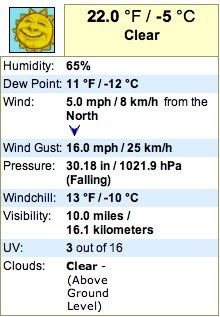
But you know what? 13 F is just too cold for a tempo run.
And I tell myself that it's not that bad. Once I get going, it will feel great. That I just have to go for a couple miles, and then I'm done for the day.
But you know what? 13 F is just too cold for a tempo run.

Wednesday, January 16, 2008
Evo Tri
The online tri community is all abuzz with news of this press release, announcing the formation of a new and exciting triathlon team.
I don't think I'll apply (I think the team is a little bit more into the longer-distance races, and I want to focus more on olympic distance and shorter), but Iron Wil has gotten me thinking about my contribution to the tri community. When I was just starting out with triathlon, preparing for my first time through Shawnee Mission, I used www.ontri.com. The site has a resource that allows you to input race distance, race date, and your fitness level, and it spits out a free training plan for you. They also have a pretty strong online community, full of helpful, experienced athletes willing to offer advice to the timid newbies who stumble upon them. It was an important resource for me, as I freaked out about all the intangibles of race day, not really sure what I was supposed to do for training, or for racing, or for anything.
In the spirit of giving back, I'm establishing a beginners' guide to triathlon. Granted, I'm not much more than a greenhorn myself, but I do this for a living, ya know; I can offer at least a few tidbits, I think.
In the future, look for the "beginner" label for posts. I have plans to provide basic information about base training, goal setting, as well as swim workouts, track workouts, and of course spinning workouts. If you stumble upon this site looking for a particular resource, let me know; I'll see what I can do.
And I guess we'll see where this takes us.
I don't think I'll apply (I think the team is a little bit more into the longer-distance races, and I want to focus more on olympic distance and shorter), but Iron Wil has gotten me thinking about my contribution to the tri community. When I was just starting out with triathlon, preparing for my first time through Shawnee Mission, I used www.ontri.com. The site has a resource that allows you to input race distance, race date, and your fitness level, and it spits out a free training plan for you. They also have a pretty strong online community, full of helpful, experienced athletes willing to offer advice to the timid newbies who stumble upon them. It was an important resource for me, as I freaked out about all the intangibles of race day, not really sure what I was supposed to do for training, or for racing, or for anything.
In the spirit of giving back, I'm establishing a beginners' guide to triathlon. Granted, I'm not much more than a greenhorn myself, but I do this for a living, ya know; I can offer at least a few tidbits, I think.
In the future, look for the "beginner" label for posts. I have plans to provide basic information about base training, goal setting, as well as swim workouts, track workouts, and of course spinning workouts. If you stumble upon this site looking for a particular resource, let me know; I'll see what I can do.
And I guess we'll see where this takes us.
It's Worth It
You know how to sacrifice. Whether you're a runner, a triathlete, a duathlete, or a weekend warrior at the gym, you know how to sacrifice.
You know about 5:30 wake-up calls to get in a workout before work. You know about 4:30 wake-up calls to get plenty of time in the transition area before your race. You know about forking over thousands for a bike, a new cassette, the deepest dished wheels, the slightest aerodynamic advantage. You know about missing weekend revelries because you want to prepare your body for the next day's long run. Maybe most significantly, you know how to deal with temporary suffering in the moment--the grueling intensities required for threshold workouts and race day performance--in pursuit of a goal that means that much to you.
You--an athlete--know how to sacrifice.
Regular people, not so much.
This article comes from the annals of personal finance (another topic of great interest to me, poor, debt-laden college student that I am). It touches on the idea that people would rather have what they want now (a $4 latte, God forbid) than something immeasurably better later (a $50,000 college fund). I would guess that athletes aren't quite as bad at this, at least in a relative sense; if nothing else, I would bet that you're able to discipline your spending better now than you could before you started making the sacrifices required for training--or would be capable of that discipline if you tried. Of course, we might forgo the $50,000 college fund for a $5,000 bike, but the principle still applies: we're used to sacrificing; we are athletes.
I want to talk briefly about an investment that I believe is worth sacrifice: a gym membership. First I'll cover what I see as the benefits of gym membership, then the sacrifices necessary for gym membership, then I'll add some caveats. And in the interest of full-disclosure, I'll also note that I am not a member of a gym; I am an employee. In other words, I don't pay for my gym membership. So know that while I try to convince you why you should.
First of all, believe it or not, my gym membership saves me money. My gym provides shampoo, conditioner, body wash, deodorant, hairspray, blow dryers, and towels (I'm sure there are other things, but these are the ones I use). Since I'm at the gym pretty frequently, I mostly shower there; it's a rare day when I shower at home. If I were really serious about my frugality, I could conceivably avoid showering at home altogether. The point is, I don't spend much money on toiletries. I use shampoo maybe once a week; I don't have to own body wash; my deodorant sees half the use it normally would. I actually don't use hairspray or a blow dryer, but if I ever want to, I don't have to buy them first. Are the savings from these toiletries significant? Nah, not really. And I still have to budget for toiletries, because I still have to buy toothpaste, floss, toothbrushes, and face wash. But these are little benefits of gym membership that you could make work for you, if you were so inclined.
But there are many other benefits of gym membership besides the minuscule savings related to toiletries. The biggest one, at least in my mind, is a swimming pool. I live in Kansas. It is currently snowing outside. Now in the summer, I can usually find time to go out to the lake and swim for free (if in dirty, fish-infested, slimy, dark, disgusting, algae-filled water). In the winter, not so much. If I don't have a gym membership, I don't do swim training between October and April. Well, November and March, if it's a warm year. In addition, my gym has a hot tub, a heated therapy pool, a dry sauna, a steam room, and--this is a big one--a SwimEx. That means that my longest swim this season will not be 60 laps in a short-course pool, but rather an hour spent swimming in place, with no need for turns or the consequent disruption of my pace. All of these things are out of reach for me. I have no idea how much an indoor, never-ending pool would cost, but I'm pretty sure that the gym membership is a better deal.
In addition, I have my choice of a variety of cardio and weight machines, lots of free weights, stability balls, wobble boards, foam rollers, yoga mats and tools . . . some of those things I have at home, but there's no way I can get the variety in my workouts that I am able to have at the gym; I simply don't have enough money for all that equipment (not to mention I have no place to store it).
Finally, my gym offers a wide variety of aerobics, pilates, cycling, water aerobics, and yoga classes. All these classes are taught by certified instructors, a.k.a. people who know what they're doing. Which means that if you don't know what you're doing, you can exercise in a safe and supportive environment because you have a fitness professional watching out for you. All of these factors add up, and so I think that a gym membership is going to be beneficial for most people.
As I've pointed out, there's no way you could afford to equip yourself with the kind of resources (equipment and personnel) that are available at a gym. But still, the money for your membership fees has got to come from somewhere. You can total up those little toiletry savings and see exactly what they could do for you. I can't really guess what those savings would be; I don't know how much soap you use. But I know for sure that it's not enough to pay for a gym membership every month. So this is where you get into the real sacrifices. At my gym, you'd have to sacrifice $40-$50 a month for a membership. Where does that money come from?
My best suggestion is to kill two birds with one stone by trimming off habits that are both calorically and financially expensive. For example, my mom eats lunch out every day. Not only does this cost $4-$7 every day, she's probably getting 200-300 more calories per day on average than she needs at lunch. So, conservatively, if she were to make her own lunch--or even bring something like a Healthy Choice microwave thingy (shudder)--she could save a couple bucks every day and cut back on the number of calories she consumes. And there's your gym membership. Another one I've heard at work (I'm not a membership sales person, by the way; I'm a fitness class instructor and trainer) is smokers claiming that they want to join a gym but can't afford it. Well if you have an addictive habit (I'm looking at you guys with an overpriced coffee in your hand), get rid of it, or at least scale back. Like get a cup of coffee once a month, or go out to lunch once a week with friends, or limit yourself to only smoking cigars occasionally. Or--and here's one that hits close to home--only have one drink when you go out to a bar (if there's a two-drink minimum, make the second drink something without alcohol).
I know it's not as easy as I make it out to be; when you don't buy your morning shot of caffeine, it's not like that money goes into a special high-yield fund; it just languishes in your checking account until you do something else with it. Or anyway, that's how mine works. My point is that the money is there if you want it; I'm trying to take away that excuse of "I just don't make enough." No, you make enough; it's a question of priorities.
But money isn't the only thing you have to budget; the other resource you need to make a gym membership work is time. I know several people who have been members at Genesis since last fall, who are just now getting into the gym. The trick, once again, is sacrifice. Are you a mother of two who works full time, makes delicious and nutritious lunches for your husband and kids, knits, is on the PTA, and volunteers at soup kitchen on Saturdays? Yikes, your schedule's full! And you still make delicious and nutritious lunches for your kids and your husband? I am impressed!
But can you wake up at 5:00, get a 5:30 aerobics class in, and be home in time to wake the kids up for school? Probably, yeah. It might be hard to get used to it; you might be a very cranky aerobics participant for the first week or so; but you can budget your time to get a workout in. Once again, just a question of priorities.
I'm not saying that everyone should belong to a gym. You know, a lot of people would be fine with walking on a bike path three or four times a week, or running on a treadmill while watching a movie with the family. And those are good options. You definitely don't need to be spending $450-$600 a year on a gym membership in order to be healthy and fit. What I'm saying is that membership at a gym, with the availability of showers, saunas, steam rooms, pools, multiple cardio and weight machines, group fitness classes, and fitness professionals, is a worthwhile investment. You might own a treadmill and some dumbbells, but there's no way you could afford to have the variety of equipment available at a gym. And you can always rent a yoga or aerobics video at the library, but that's nothing compared to having a certified instructor come over and physically adjust your position so that you get the safest and most effective stretch.
If you're reading this, you're probably an athlete. You know how to sacrifice. But maybe you're not an athlete; maybe you're not even particularly fit, physically. I can tell you from experience (before I got into triathlon, I was not physically active at all) that it might be a long process to get used to making these kinds of sacrifices, but it's not particularly difficult if you ease into it. Before long, you won't even miss that overpriced coffee.
::Note:: This is the first time I've tried to write anything relating to finance; it's not really my topic, but I felt inspired. Any feedback is totally welcome and appreciated.
You know about 5:30 wake-up calls to get in a workout before work. You know about 4:30 wake-up calls to get plenty of time in the transition area before your race. You know about forking over thousands for a bike, a new cassette, the deepest dished wheels, the slightest aerodynamic advantage. You know about missing weekend revelries because you want to prepare your body for the next day's long run. Maybe most significantly, you know how to deal with temporary suffering in the moment--the grueling intensities required for threshold workouts and race day performance--in pursuit of a goal that means that much to you.
You--an athlete--know how to sacrifice.
Regular people, not so much.
This article comes from the annals of personal finance (another topic of great interest to me, poor, debt-laden college student that I am). It touches on the idea that people would rather have what they want now (a $4 latte, God forbid) than something immeasurably better later (a $50,000 college fund). I would guess that athletes aren't quite as bad at this, at least in a relative sense; if nothing else, I would bet that you're able to discipline your spending better now than you could before you started making the sacrifices required for training--or would be capable of that discipline if you tried. Of course, we might forgo the $50,000 college fund for a $5,000 bike, but the principle still applies: we're used to sacrificing; we are athletes.
I want to talk briefly about an investment that I believe is worth sacrifice: a gym membership. First I'll cover what I see as the benefits of gym membership, then the sacrifices necessary for gym membership, then I'll add some caveats. And in the interest of full-disclosure, I'll also note that I am not a member of a gym; I am an employee. In other words, I don't pay for my gym membership. So know that while I try to convince you why you should.
First of all, believe it or not, my gym membership saves me money. My gym provides shampoo, conditioner, body wash, deodorant, hairspray, blow dryers, and towels (I'm sure there are other things, but these are the ones I use). Since I'm at the gym pretty frequently, I mostly shower there; it's a rare day when I shower at home. If I were really serious about my frugality, I could conceivably avoid showering at home altogether. The point is, I don't spend much money on toiletries. I use shampoo maybe once a week; I don't have to own body wash; my deodorant sees half the use it normally would. I actually don't use hairspray or a blow dryer, but if I ever want to, I don't have to buy them first. Are the savings from these toiletries significant? Nah, not really. And I still have to budget for toiletries, because I still have to buy toothpaste, floss, toothbrushes, and face wash. But these are little benefits of gym membership that you could make work for you, if you were so inclined.
But there are many other benefits of gym membership besides the minuscule savings related to toiletries. The biggest one, at least in my mind, is a swimming pool. I live in Kansas. It is currently snowing outside. Now in the summer, I can usually find time to go out to the lake and swim for free (if in dirty, fish-infested, slimy, dark, disgusting, algae-filled water). In the winter, not so much. If I don't have a gym membership, I don't do swim training between October and April. Well, November and March, if it's a warm year. In addition, my gym has a hot tub, a heated therapy pool, a dry sauna, a steam room, and--this is a big one--a SwimEx. That means that my longest swim this season will not be 60 laps in a short-course pool, but rather an hour spent swimming in place, with no need for turns or the consequent disruption of my pace. All of these things are out of reach for me. I have no idea how much an indoor, never-ending pool would cost, but I'm pretty sure that the gym membership is a better deal.
In addition, I have my choice of a variety of cardio and weight machines, lots of free weights, stability balls, wobble boards, foam rollers, yoga mats and tools . . . some of those things I have at home, but there's no way I can get the variety in my workouts that I am able to have at the gym; I simply don't have enough money for all that equipment (not to mention I have no place to store it).
Finally, my gym offers a wide variety of aerobics, pilates, cycling, water aerobics, and yoga classes. All these classes are taught by certified instructors, a.k.a. people who know what they're doing. Which means that if you don't know what you're doing, you can exercise in a safe and supportive environment because you have a fitness professional watching out for you. All of these factors add up, and so I think that a gym membership is going to be beneficial for most people.
As I've pointed out, there's no way you could afford to equip yourself with the kind of resources (equipment and personnel) that are available at a gym. But still, the money for your membership fees has got to come from somewhere. You can total up those little toiletry savings and see exactly what they could do for you. I can't really guess what those savings would be; I don't know how much soap you use. But I know for sure that it's not enough to pay for a gym membership every month. So this is where you get into the real sacrifices. At my gym, you'd have to sacrifice $40-$50 a month for a membership. Where does that money come from?
My best suggestion is to kill two birds with one stone by trimming off habits that are both calorically and financially expensive. For example, my mom eats lunch out every day. Not only does this cost $4-$7 every day, she's probably getting 200-300 more calories per day on average than she needs at lunch. So, conservatively, if she were to make her own lunch--or even bring something like a Healthy Choice microwave thingy (shudder)--she could save a couple bucks every day and cut back on the number of calories she consumes. And there's your gym membership. Another one I've heard at work (I'm not a membership sales person, by the way; I'm a fitness class instructor and trainer) is smokers claiming that they want to join a gym but can't afford it. Well if you have an addictive habit (I'm looking at you guys with an overpriced coffee in your hand), get rid of it, or at least scale back. Like get a cup of coffee once a month, or go out to lunch once a week with friends, or limit yourself to only smoking cigars occasionally. Or--and here's one that hits close to home--only have one drink when you go out to a bar (if there's a two-drink minimum, make the second drink something without alcohol).
I know it's not as easy as I make it out to be; when you don't buy your morning shot of caffeine, it's not like that money goes into a special high-yield fund; it just languishes in your checking account until you do something else with it. Or anyway, that's how mine works. My point is that the money is there if you want it; I'm trying to take away that excuse of "I just don't make enough." No, you make enough; it's a question of priorities.
But money isn't the only thing you have to budget; the other resource you need to make a gym membership work is time. I know several people who have been members at Genesis since last fall, who are just now getting into the gym. The trick, once again, is sacrifice. Are you a mother of two who works full time, makes delicious and nutritious lunches for your husband and kids, knits, is on the PTA, and volunteers at soup kitchen on Saturdays? Yikes, your schedule's full! And you still make delicious and nutritious lunches for your kids and your husband? I am impressed!
But can you wake up at 5:00, get a 5:30 aerobics class in, and be home in time to wake the kids up for school? Probably, yeah. It might be hard to get used to it; you might be a very cranky aerobics participant for the first week or so; but you can budget your time to get a workout in. Once again, just a question of priorities.
I'm not saying that everyone should belong to a gym. You know, a lot of people would be fine with walking on a bike path three or four times a week, or running on a treadmill while watching a movie with the family. And those are good options. You definitely don't need to be spending $450-$600 a year on a gym membership in order to be healthy and fit. What I'm saying is that membership at a gym, with the availability of showers, saunas, steam rooms, pools, multiple cardio and weight machines, group fitness classes, and fitness professionals, is a worthwhile investment. You might own a treadmill and some dumbbells, but there's no way you could afford to have the variety of equipment available at a gym. And you can always rent a yoga or aerobics video at the library, but that's nothing compared to having a certified instructor come over and physically adjust your position so that you get the safest and most effective stretch.
If you're reading this, you're probably an athlete. You know how to sacrifice. But maybe you're not an athlete; maybe you're not even particularly fit, physically. I can tell you from experience (before I got into triathlon, I was not physically active at all) that it might be a long process to get used to making these kinds of sacrifices, but it's not particularly difficult if you ease into it. Before long, you won't even miss that overpriced coffee.
::Note:: This is the first time I've tried to write anything relating to finance; it's not really my topic, but I felt inspired. Any feedback is totally welcome and appreciated.
Tuesday, January 15, 2008
Oofph
Yikes, that was a difficult swim workout. I warmed up, drilled, and did a few hard 50s to get the heart going, then I hopped in the SwimEx for my long, continuous swim. Last week I swam 20 minutes; this week I swam 24. And I swear I could tell when 20 minutes had passed, because I felt sooooo tired.
I'm hoping that it's just because I lifted yesterday morning, and my arms are tired from that. Otherwise, I'm going to have to reconsider increasing my volume by 20% every week.
I'm hoping that it's just because I lifted yesterday morning, and my arms are tired from that. Otherwise, I'm going to have to reconsider increasing my volume by 20% every week.
Monday, January 14, 2008
Sh-sh-sh-sugar high!
Oh. My. Goodness.
I need to get my consumption of sweets under control.
Which is sort of a strange thing to say, because I don't eat a ton of sweets. I might indulge in a cup (not a bowl, mind you--a cup) of ice cream with my family every now and then . . . I might even add some hot fudge and melted peanut butter (I know, I'm going to triathlete hell). But in general, dessert for me is frosted shredded wheat with 1% milk, whole grain bread with 2 tbsp (exactly) of peanut butter, or an apple.
But for some reason, the past two days I have not been able to keep my hands off the sugar! Well, to be fair, today it wasn't just the sugar. I wanted to eat everything in sight. But this past weekend, I consumed all kinds of junk with nary a thought for my energy needs, high-quality fuel, my health!
And tonight, I think I paid the price.
Now I'm not sure if this is psychosomatic or a legitimate problem, but my heart felt . . . erm, flighty tonight. Agitated. Like it was beating too many times, fluttering away in my chest, trying to escape (probably from the bad food I've been pouring into it). Which is a strange feeling. What exactly does a heart murmur feel like? Could this be a result of too much sugar? Because even though I've had more than usual today, it's still not that much (relative to the general population).
At any rate, it's settled down now, and I'm not sure what to do about it. Am I craving those simple carbs because my body's not getting enough fuel? Along with the 4:30 a.m. wake-up calls and the high-volume base training (not to mention the daily Group Ride classes), is eating less than 2,000 calories a day simply asking too much of my body's recovery capacity? Should I up the intake a little bit, keep the deficit to 500-1000 calories a day? Or am I just lazy/hormonal/stressed to the point that I have to stay out of the kitchen to prevent (bad) food from constantly entering my mouth?
It's a real dilemma; is it better for my health to eat more, or am I just using the high volume as an excuse to eat?
I need to get my consumption of sweets under control.
Which is sort of a strange thing to say, because I don't eat a ton of sweets. I might indulge in a cup (not a bowl, mind you--a cup) of ice cream with my family every now and then . . . I might even add some hot fudge and melted peanut butter (I know, I'm going to triathlete hell). But in general, dessert for me is frosted shredded wheat with 1% milk, whole grain bread with 2 tbsp (exactly) of peanut butter, or an apple.
But for some reason, the past two days I have not been able to keep my hands off the sugar! Well, to be fair, today it wasn't just the sugar. I wanted to eat everything in sight. But this past weekend, I consumed all kinds of junk with nary a thought for my energy needs, high-quality fuel, my health!
And tonight, I think I paid the price.
Now I'm not sure if this is psychosomatic or a legitimate problem, but my heart felt . . . erm, flighty tonight. Agitated. Like it was beating too many times, fluttering away in my chest, trying to escape (probably from the bad food I've been pouring into it). Which is a strange feeling. What exactly does a heart murmur feel like? Could this be a result of too much sugar? Because even though I've had more than usual today, it's still not that much (relative to the general population).
At any rate, it's settled down now, and I'm not sure what to do about it. Am I craving those simple carbs because my body's not getting enough fuel? Along with the 4:30 a.m. wake-up calls and the high-volume base training (not to mention the daily Group Ride classes), is eating less than 2,000 calories a day simply asking too much of my body's recovery capacity? Should I up the intake a little bit, keep the deficit to 500-1000 calories a day? Or am I just lazy/hormonal/stressed to the point that I have to stay out of the kitchen to prevent (bad) food from constantly entering my mouth?
It's a real dilemma; is it better for my health to eat more, or am I just using the high volume as an excuse to eat?
Sunday, January 13, 2008
Just Warming Up: Jan 7-13
If you look a little to the right, you'll notice I've added my entries at the Trifuel training log as an RSS feed. It's a little screwed up right now (that first entry is actually an entry for Shawnee Mission 08), but it'll start to look normal after this next week.
And now that I'm into the bulk of the season, you can expect more workouts and recipes.
With that out of the way, I'll tell you a little bit about my first week back in the flow.
It's been an interesting week. I didn't get in all of the workouts I've scheduled, and a few that I did get in sucked. It's okay, though; this is also the first week of full schedule for the Genesis Multisport Club--this means that I'm not only up at 4:30 every morning, but also that I'm teaching a total of 25 hours, between GMC classes, water aerobics, and spinning. Honestly, the 4:30 wake up calls were getting to me, by Friday. After a weekend of sleeping in and resting, I'm feeling quite a bit better, but my weeks are going to be loooooong. I hope that my body will get used to this new regimen; otherwise, the lack of sleep will be one more element keeping me on the line between training and overtraining.
My long runs have been the highlight of my week--long swims, too, for that matter--so much so that I'm really looking forward to doing my endurance swim; in fact, I wish that it were scheduled for tomorrow instead of Tuesday. And both of my long runs (both 6 miles) have felt so wonderful! I've felt strong and fast and completely capable . . . I can pick up my leg speed or extend my stride at any point during those 6 miles with minimal effort. My heart rate goes up, of course, but it's not like I'm barely shuffling along. And I'm having no trouble keeping my heart rate in zone 3 (although I have been debating exactly where zone 3 is . . .)
For bike volume, I'm primarily on a spinning bike. I know, I know . . . far from ideal. But I got a flat on my long run at 18 miles last week and now I can't find my tire levers! So even though I have spare tubes and a pump and everything I need, I can't change my tire. And for crying out loud, today was a lousy day to have my bike be inaccessible! It was absolutely perfect out today . . . warm enough that I rolled my windows down on the way home, with absolutely no window and a beautiful, big, blue sky . . . but no bike for me. Sad face. I'll buy new tire levers this week and change my tire and go ahead and get in a long ride . . . but the weather will probably be crap and I'll have to do it all inside watching TV or listening to Endurance Planet or something. Sigh . . .
In the meantime, I teach five cycling classes a week. I've finally done Group Ride enough that I've trained my heart rate to stay low. The first time I did the class, I think my max heart rate was 181 or 185 or something (too lazy to whip out the training log right now). Now I keep my heart rate in zone 3 the whole time, without a great deal of effort (although I do cheat on adding resistance). Bottom line, I'm getting plenty of saddle time (like upwards of 5 hours a week), if not in my actual saddle (or on an actual road).
That's been my week. I'm loving it, now more than ever. I can't wait to see the adaptations my body makes in this 2008 season.
Thanks for reading!
Wednesday, January 9, 2008
Full Swing
Two very important things happened this week.
First of all, I began my training on Saturday with a 6-mile long run. It felt amazing. It was cool enough that I started with a sweater, but warm enough that I was ready to take it off by the end of the jog. The sky was slightly overcast, the wind was minimal, and my ipod was pumping out some great tunes (I have to admit that I may have thrown in some fartlek-type sprint intervals because of the songs I was listening to . . . so much for staying in zone 3). My pace was apparently 10:55 (according to gmap pedometers), which surprised; I felt like I was running much faster. I suppose I shouldn't be too concerned with pace, at this point in the season. My main concern is that I felt awesome during the whole run! I also got in an 18-mile bike on Sunday (it was supposed to be 30 miles, but I flatted around mile 18 . . . I had a spare, but no air pump). Amazingly, the weather was even nicer on Sunday than it had been Saturday, and I passed a ton of cyclists, walkers, joggers, and parents out with their kids. Tuesday was my first endurance swim workout, and I felt amazing. I did my warm-up and drill sets in the pool, then hopped into the Swim-Ex (I know! how cool is is that my gym has a swimming treadmill?) for my endurance set--a 20-minute continuous swim. I set the timer, found a speed that felt challenging but aerobic, and started swimming. I had the speed set at 2.3 MPH (covered about 1325 yds in 20 minutes), which is probably the fastest I've ever done an endurance set. But I'm skeptical about the merits of swimming in the current; I think the current might provide extra buoyancy. All-in-all, it's been a good start to the season!
The second big thing that happened this week was the beginning of Genesis Multisport workouts. All-in-all--between multisport workouts, cycling classes, and water aerobics--I'm teaching about 25 hours a week. As jobs go, that's not a lot of time, but it seems like a lot more with coaching. Also, my days begin at 4:30, now, every weekday, thanks to the multisport club's 5:30 a.m. workouts (but I can't complain too much, since I'm the one who set up the schedule). That's not so bad on Mondays and Wednesdays, when I get to go home at noon, but on Tuesdays and Thursdays, when I have to be in town from 5:30 a.m. to 7:30 p.m., it can be exhausting.
Fortunately, coaching the multisport club is incredibly rewarding. Right now, we have a solid member base of about 12 people (although I'm sure we'll build momentum in the next few weeks; after all, it's only been three days!), half of whom have been coming to the 5:30 a.m. workouts every single day. They're a dedicated group, and I look forward to seeing how they improve in the next several months. And I'm holding up okay, so far; I've been able to get plenty of nap time in, and I'm having a surprisingly easy time of waking up at 4:30 (so far).
It's shaping up to be a very good, very exciting year!
First of all, I began my training on Saturday with a 6-mile long run. It felt amazing. It was cool enough that I started with a sweater, but warm enough that I was ready to take it off by the end of the jog. The sky was slightly overcast, the wind was minimal, and my ipod was pumping out some great tunes (I have to admit that I may have thrown in some fartlek-type sprint intervals because of the songs I was listening to . . . so much for staying in zone 3). My pace was apparently 10:55 (according to gmap pedometers), which surprised; I felt like I was running much faster. I suppose I shouldn't be too concerned with pace, at this point in the season. My main concern is that I felt awesome during the whole run! I also got in an 18-mile bike on Sunday (it was supposed to be 30 miles, but I flatted around mile 18 . . . I had a spare, but no air pump). Amazingly, the weather was even nicer on Sunday than it had been Saturday, and I passed a ton of cyclists, walkers, joggers, and parents out with their kids. Tuesday was my first endurance swim workout, and I felt amazing. I did my warm-up and drill sets in the pool, then hopped into the Swim-Ex (I know! how cool is is that my gym has a swimming treadmill?) for my endurance set--a 20-minute continuous swim. I set the timer, found a speed that felt challenging but aerobic, and started swimming. I had the speed set at 2.3 MPH (covered about 1325 yds in 20 minutes), which is probably the fastest I've ever done an endurance set. But I'm skeptical about the merits of swimming in the current; I think the current might provide extra buoyancy. All-in-all, it's been a good start to the season!
The second big thing that happened this week was the beginning of Genesis Multisport workouts. All-in-all--between multisport workouts, cycling classes, and water aerobics--I'm teaching about 25 hours a week. As jobs go, that's not a lot of time, but it seems like a lot more with coaching. Also, my days begin at 4:30, now, every weekday, thanks to the multisport club's 5:30 a.m. workouts (but I can't complain too much, since I'm the one who set up the schedule). That's not so bad on Mondays and Wednesdays, when I get to go home at noon, but on Tuesdays and Thursdays, when I have to be in town from 5:30 a.m. to 7:30 p.m., it can be exhausting.
Fortunately, coaching the multisport club is incredibly rewarding. Right now, we have a solid member base of about 12 people (although I'm sure we'll build momentum in the next few weeks; after all, it's only been three days!), half of whom have been coming to the 5:30 a.m. workouts every single day. They're a dedicated group, and I look forward to seeing how they improve in the next several months. And I'm holding up okay, so far; I've been able to get plenty of nap time in, and I'm having a surprisingly easy time of waking up at 4:30 (so far).
It's shaping up to be a very good, very exciting year!
Friday, January 4, 2008
:Rev: :Rev: :Vroooom:
I got my February issue of Triathlete this week. Normally, I would have torn straight through it by now.
But I've barely read five pages.
Part of the reason is that, as we all know, Triathlete has become ridiculously populated with advertisements. Seriously. It's ridiculous.
But the other reason is that I cannot stand to read another article about triathlon. Because I just have to get out there and train.
I think that means I'm ready. It's time to start. And the forecast for this weekend is for temperatures in the 60s.
There could not be a more perfect week to phase out of the off-season.
Oh, and also the Genesis multisport club starts training on Monday. At 5:30 a.m. So I will be at the gym at 5:30 on Monday. And every morning after that.
:Smile:
But I've barely read five pages.
Part of the reason is that, as we all know, Triathlete has become ridiculously populated with advertisements. Seriously. It's ridiculous.
But the other reason is that I cannot stand to read another article about triathlon. Because I just have to get out there and train.
I think that means I'm ready. It's time to start. And the forecast for this weekend is for temperatures in the 60s.
There could not be a more perfect week to phase out of the off-season.
Oh, and also the Genesis multisport club starts training on Monday. At 5:30 a.m. So I will be at the gym at 5:30 on Monday. And every morning after that.
:Smile:
Thursday, January 3, 2008
Workout Mix
All of these songs have tempos between 90 and 95 BPM, which will allow you to run/bike to them at 90-95 RPM. Just a little mix to let you know I care.

Wednesday, January 2, 2008
I Passed!
This morning I took my National Strength and Conditioning Association certification exam.
And I passed!
Which means that I am now officially a certified personal trainer!
And I passed!
Which means that I am now officially a certified personal trainer!
Tuesday, January 1, 2008
Ringing the New Year in Right
What was the first thing I did in 2008?
Did I have a glass of champagne? Did I kiss a pretty girl? Did I sing about old acquaintances?
No, no, and no.
Because at 12:00 a.m. on January 1, 2008, I pulled on my shoes and went out for a jog.
And that's how I rang in this new year.
Best wishes for 2008, all!
Did I have a glass of champagne? Did I kiss a pretty girl? Did I sing about old acquaintances?
No, no, and no.
Because at 12:00 a.m. on January 1, 2008, I pulled on my shoes and went out for a jog.
And that's how I rang in this new year.
Best wishes for 2008, all!
Thursday, December 20, 2007
Why Tri?: A New Series
Endurance Planet 9-18-07: "The New Brand on the Block"
I've been pondering this question ever since I first posted on it: why tri? Why do we subject our bodies to such extreme conditions? Why do we ride/run/swim for hours at a time? Why do we scrutinize our eating and sleeping habits?
Hala Bissada gets at one possible reason in this interview (beginning around 1:50)
"After finishing my first race, practically being the last one across the finish line, there was a sense of pride and accomplishment . . . I thought I was gonna be all emotional and crying when I crossed the finish line . . . it was an awesome experience . . . It really helped me with my self-esteem, like I said, the sense of accomplishment--a sense of looking physically fit and feeling good about myself, from that perspective . . ."
I'm not quite ready to post an extended piece on my personal reasons for pursuing triathlon, but Hala Bissada gets at a lot of it.
We tri because it makes us feel totally bad-ass.
I've been pondering this question ever since I first posted on it: why tri? Why do we subject our bodies to such extreme conditions? Why do we ride/run/swim for hours at a time? Why do we scrutinize our eating and sleeping habits?
Hala Bissada gets at one possible reason in this interview (beginning around 1:50)
"After finishing my first race, practically being the last one across the finish line, there was a sense of pride and accomplishment . . . I thought I was gonna be all emotional and crying when I crossed the finish line . . . it was an awesome experience . . . It really helped me with my self-esteem, like I said, the sense of accomplishment--a sense of looking physically fit and feeling good about myself, from that perspective . . ."
I'm not quite ready to post an extended piece on my personal reasons for pursuing triathlon, but Hala Bissada gets at a lot of it.
We tri because it makes us feel totally bad-ass.
Wednesday, December 19, 2007
Spinning Workout 21 - Building Cadence
Since it takes so long to record each podcast episode, I've decided to start publishing my workout playlist with instructions here and on itunes (you can find Spinning Workout 21 as an imix on itunes, also). This way you won't have someone telling you what to do and when, but you'll at least have access to the music and the workouts.
Spinning Workout 21 - Building Cadence
Match cadence to song BPM throughout
The Tide is High (4:42): Pre-workout
One Way or Another (3:29)--81 BPM: Warm up
The Breaks (3:23)--90 BPM: Work form, establish baseline effort
Paper Thin Hymn (3:15)--92 BPM: Fast, short climbs
I Am the Man (3:58)--96 BPM: High effort TT
We Float (6:08)--98 BPM: Quick effort with bursts of high power, 1/2 cadence
Nikita (4:42)--105 BPM: TT
Heart of Glass (3:38)--110 BPM: Jumps at: 2nd verse, 3rd verse, last verse
Stupid Girl (4:19)--118 BPM: High intensity TT
Playgirl (3:51)--120 BPM: TT with standing intervals
Inside of Me (3:42)--132 BPM: TT, faster than tempo if possible; add an extra kick 30 seconds from the end
Sayonara Senorita (4:11)--126 BPM: Cool down
Time of Your Song (4:26): Stretch/post-workout
Kissy Kissy (5:02): Post-workout
One of the greatest things about spinning bikes is that you can spin your legs much faster with a flywheel than on a regular bike. This workout uses that advantage to train mental toughness (believe me, doing 132 RPM for three and a half minutes will be tough) and neuromuscular speed. By the last song, your legs will be going at near-sprint speed. This is also a perfect base building workout, because most of the songs keep you at an aerobic level, while the last few songs should push you over the top into Zone 4.
I will also still publish my workouts as podcasts; it'll just take a while.
Looking for more workouts? Go here!
Monday, December 17, 2007
Get Out!
Although I feel sort of guilty about it, having read Gale Bernhardt's blog about mountain biking in sub-freezing temperatures on snow- and ice-packed roads, Coach Jenny has really made my week.
I wouldn't consider myself that wimpy about running outdoors in the winter . . . I did a short trail run last weekend when the temps were in the mid-30s and it was lightly raining. And I ran back from my poor, be-ditched car yesterday on an ice-packed (obviously) dirt road (the temperature then was probably around 20 degrees F).
But I spent the last four years in Southern California; so I would bet that I'm wimpier than I think.
I wouldn't consider myself that wimpy about running outdoors in the winter . . . I did a short trail run last weekend when the temps were in the mid-30s and it was lightly raining. And I ran back from my poor, be-ditched car yesterday on an ice-packed (obviously) dirt road (the temperature then was probably around 20 degrees F).
But I spent the last four years in Southern California; so I would bet that I'm wimpier than I think.
Sunday, December 16, 2007
Race Report: Derby Rec Center Indoor Triathlon
Well, this was a good end to a craptastic week.
The Derby Rec Center indoor tri is an annual, local event, very small and low-key. 500 yd indoor pool swim, 6 mile (I know, right) bike on a stationary trainer, 2 mile (20 lap) run on an indoor track. Certainly the smallest (and shortest!) race I've ever done. But I don't care. It was awesome.
My heat began at 8:30 (the heats were leaving on a half-hour interval, seeded by time, beginning at 8:00), so I left my house at 7:30, hoping to get to the DRC at around 8:00. Well . . . that didn't happen. Because I slid off the road and got stuck in a ditch. I ran the mile back home, swearing all the way and wondering what I ever did to God (actually, let's not get into that). My dad came back with his truck and we spent the next hour and a half trying to get my car (his car, actually, because the key to my car snapped off in the ignition last night while I was at Wal-Mart getting a tire repaired . . . see? crummy week) unstuck. We finally got the car out of the ditch when a couple guys in a four-wheel-drive truck came by. It took them about five minutes to take care of it. Very nice of them. And of course, by this time it was 8:45, I'd missed my heat, and I was wondering whether I should go and try to squeeze into a later heat, or take it as a sign from the universe and crawl back into bed.
I drove around the block once (which is 4 miles, by the way), and the car was rattling because of the mud and snow that had built up around the wheels. I took that as my final sign and headed back home. "Wake me up when it's spring," I told my dad, as I came back into the house. I sat down at my computer to check my e-mail, and there was the pre-race e-mail . . . heat times, race day instructions, and all. It was about 9:00, at this point, but I thought . . . I've never, ever had a DNS. I have to at least go and try to get into the race.
And I'm very glad that I did.
Swim: 500 yd - 9:48
The time is approximate. My official split was 11:11, but that included my transition time. I know for sure that when I came out of the pool area, my timer (we each had our own timer) told me that I was at 9 something. Oddly enough, because I got squeezed into the last (fifth) heat, I ended up in the same lane as Rich, one of the guys in my spinning class, who's just getting into triathlon from cycling. It was really cool to have someone to kid around with pre-race, especially since this was the first race I've done where I had neither team nor family to accompany me. I felt confident and strong going through the swim, like I was giving it my all the whole time, but not wearing myself out too much for the bike and run. However, I wasn't entirely happy with my form. There were times when I felt like my legs were heavy and my head was up. I think it's because I was being lazy about my core stability; when I tightened my core, my body position evened out. Also, I was unimpressed with my breathing--every other stroke (I normally try to do every 3, to practice bilateral breathing). But I have to admit . . . I really like the pool swims; don't have to worry about dodging other people or fighting through packs of slow-pokes. You can just put your head down and swim. And that's what I did.
Bike: 6 miles - 19:00 minutes
The bike was mentally difficult. First of all, we were on LeMond trainers with a display panel that counts down the miles. However, the amount of resistance you use doesn't affect how quickly you complete the distance, so the best strategy is to spin along with no resistance and a high cadence. Which is hard to do for 20 minutes straight. I started to space out, and my cadence would dip down to 128 or so. It's a crazy thing to do to triathletes, no? We spend so much stinking time pedaling at the ideal cadence (whatever that is for you; for me, it's around 95) in the biggest gear we can manage. That's just how we train. So to put a triathlete on a bike and tell them to pedal their legs off for 20 minutes with absolutely no resistance . . . just silly. Anyway, it was fun, because all 10 of us in the fifth heat were in a long line together, so there was a little bit of banter to be had. And once again, I was right next to Rich, which was fun (even though I thought that he was going to kill himself; he was pounding away at 140-145 RPM the whole time). So the bike was less than ideal, but I felt like I did well.
Run: 2 miles - 18:18
Once again, this time includes the transition, so it's not entirely accurate. I know that my mile splits were both under 9:00 (the first was 8:51). Running on a 1/10 mile track for two miles is torture. But I felt that I pushed my body, and managed to maintain a high level of pain throughout (although I never pushed through that to a new level, which is always what I'm looking to do in short races). And sub-9 is the best pace I've ever set for a triathlon where the run comes at the end (I did 8:34 at the CSULB reverse sprint)! Also--a fun bonus--the track was upstairs (you know, wrapping around the gym), separated from a weight and cardio room by a low wall; the floor behind that wall, in between the track and the cardio room, was blue, so it had the azure, finish-chute feel.
But the best part of the day was that I got first place in my age group, with a time of 48:36! Well, allow me to add some caveats: the woman who was actually fastest in my age group got third place overall, which means that she was taken out of the running for age-group awards. She was a minute faster than me (if only I hadn't worn socks . . .), but I'm pretty sure, because of her placement, that I got fourth overall. And okay, there were only fifty people racing, and there were only four or five people in my age group, but I really don't care. I got first in my age group!
And I'm sure you could guess, but this really turned my day around. I mean, I still had to go pull a six-hour shift at the rock wall, but I was in a much better mood about it today. So I hope that this small triumph will be enough to pull me out of what has been a really terrible week. After my car went into the ditch this morning, I was afraid that the bad week was going to expand into a terrible month or something. But I feel much more motivated, now, to work harder at not letting any bad aspects of life spiral out of my reach and take over my whole outlook.
The Derby Rec Center indoor tri is an annual, local event, very small and low-key. 500 yd indoor pool swim, 6 mile (I know, right) bike on a stationary trainer, 2 mile (20 lap) run on an indoor track. Certainly the smallest (and shortest!) race I've ever done. But I don't care. It was awesome.
My heat began at 8:30 (the heats were leaving on a half-hour interval, seeded by time, beginning at 8:00), so I left my house at 7:30, hoping to get to the DRC at around 8:00. Well . . . that didn't happen. Because I slid off the road and got stuck in a ditch. I ran the mile back home, swearing all the way and wondering what I ever did to God (actually, let's not get into that). My dad came back with his truck and we spent the next hour and a half trying to get my car (his car, actually, because the key to my car snapped off in the ignition last night while I was at Wal-Mart getting a tire repaired . . . see? crummy week) unstuck. We finally got the car out of the ditch when a couple guys in a four-wheel-drive truck came by. It took them about five minutes to take care of it. Very nice of them. And of course, by this time it was 8:45, I'd missed my heat, and I was wondering whether I should go and try to squeeze into a later heat, or take it as a sign from the universe and crawl back into bed.
I drove around the block once (which is 4 miles, by the way), and the car was rattling because of the mud and snow that had built up around the wheels. I took that as my final sign and headed back home. "Wake me up when it's spring," I told my dad, as I came back into the house. I sat down at my computer to check my e-mail, and there was the pre-race e-mail . . . heat times, race day instructions, and all. It was about 9:00, at this point, but I thought . . . I've never, ever had a DNS. I have to at least go and try to get into the race.
And I'm very glad that I did.
Swim: 500 yd - 9:48
The time is approximate. My official split was 11:11, but that included my transition time. I know for sure that when I came out of the pool area, my timer (we each had our own timer) told me that I was at 9 something. Oddly enough, because I got squeezed into the last (fifth) heat, I ended up in the same lane as Rich, one of the guys in my spinning class, who's just getting into triathlon from cycling. It was really cool to have someone to kid around with pre-race, especially since this was the first race I've done where I had neither team nor family to accompany me. I felt confident and strong going through the swim, like I was giving it my all the whole time, but not wearing myself out too much for the bike and run. However, I wasn't entirely happy with my form. There were times when I felt like my legs were heavy and my head was up. I think it's because I was being lazy about my core stability; when I tightened my core, my body position evened out. Also, I was unimpressed with my breathing--every other stroke (I normally try to do every 3, to practice bilateral breathing). But I have to admit . . . I really like the pool swims; don't have to worry about dodging other people or fighting through packs of slow-pokes. You can just put your head down and swim. And that's what I did.
Bike: 6 miles - 19:00 minutes
The bike was mentally difficult. First of all, we were on LeMond trainers with a display panel that counts down the miles. However, the amount of resistance you use doesn't affect how quickly you complete the distance, so the best strategy is to spin along with no resistance and a high cadence. Which is hard to do for 20 minutes straight. I started to space out, and my cadence would dip down to 128 or so. It's a crazy thing to do to triathletes, no? We spend so much stinking time pedaling at the ideal cadence (whatever that is for you; for me, it's around 95) in the biggest gear we can manage. That's just how we train. So to put a triathlete on a bike and tell them to pedal their legs off for 20 minutes with absolutely no resistance . . . just silly. Anyway, it was fun, because all 10 of us in the fifth heat were in a long line together, so there was a little bit of banter to be had. And once again, I was right next to Rich, which was fun (even though I thought that he was going to kill himself; he was pounding away at 140-145 RPM the whole time). So the bike was less than ideal, but I felt like I did well.
Run: 2 miles - 18:18
Once again, this time includes the transition, so it's not entirely accurate. I know that my mile splits were both under 9:00 (the first was 8:51). Running on a 1/10 mile track for two miles is torture. But I felt that I pushed my body, and managed to maintain a high level of pain throughout (although I never pushed through that to a new level, which is always what I'm looking to do in short races). And sub-9 is the best pace I've ever set for a triathlon where the run comes at the end (I did 8:34 at the CSULB reverse sprint)! Also--a fun bonus--the track was upstairs (you know, wrapping around the gym), separated from a weight and cardio room by a low wall; the floor behind that wall, in between the track and the cardio room, was blue, so it had the azure, finish-chute feel.
But the best part of the day was that I got first place in my age group, with a time of 48:36! Well, allow me to add some caveats: the woman who was actually fastest in my age group got third place overall, which means that she was taken out of the running for age-group awards. She was a minute faster than me (if only I hadn't worn socks . . .), but I'm pretty sure, because of her placement, that I got fourth overall. And okay, there were only fifty people racing, and there were only four or five people in my age group, but I really don't care. I got first in my age group!
And I'm sure you could guess, but this really turned my day around. I mean, I still had to go pull a six-hour shift at the rock wall, but I was in a much better mood about it today. So I hope that this small triumph will be enough to pull me out of what has been a really terrible week. After my car went into the ditch this morning, I was afraid that the bad week was going to expand into a terrible month or something. But I feel much more motivated, now, to work harder at not letting any bad aspects of life spiral out of my reach and take over my whole outlook.
Monday, December 10, 2007
Product Review: Balance Bare
 Some of you have probably already read my run-down of a selection of nutrition bars. This weekend, while shopping at Dillon's, I happened to read the back--more specifically, the ingredients--of a standard Balance bar. As soon as I saw "high fructose corn syrup," I despaired. Much like Iron Wil and her yogurt, Balance bars are one of my favorite options (although I often opt for the cheaper and less-filling Nature's Valley 36-packs) for on-the-go breakfasts.
Well, hard as it was to pass up such tempting new flavors as triple chocolate chaos, I decided to go the more disciplined route and tried the new (to me) Balance Bare bars. I bought three different bars, just to try them out: fruit and nut, chocolate chip, and cinnamon oats and honey. This morning for breakfast, I tried the fruit and nut variety.
The bar is surprisingly hefty, thicker and stouter than I would expect, whereas Balance bars are generally small and dense. The bar weighs 50 g, has 15 g protein, 7 g fat, and 23 g carbohydrate (16 from sugar, which seems to me really high). Like a standard Balance bar, the Bare has a healthy dose of vitamins and minerals, although I don't have a Balance bar around here right now to compare portions.
The bar has a very pleasant taste. It's sweetened with evaporated cane juice, which gives it a light, almost malty flavor and texture. It reminds of this really, really good trail mix I had once . . . I think it was called Mrs. Mayo's . . . and it was sweetened with pomegranate juice. This bar reminds me of that taste and texture. The bar is primarily crispy rice, I think. At least, that's what I think that textural element was. At any rate, the fruit and nut element was understated, but it was very tasty when I got a hit of dried cranberry or nut.
My main complaint was that the coating on the bottom of the bar gave the whole thing a crumbly, even grainy texture. I think that's probably from the added protein. So while the bar was actually pretty tasty, I didn't care much for the crumbly, malt-o-meal texture. And the fact that so many of the carbohydrates were sugars further deters me. So would I buy this bar again? Maybe if it's on sale; it was only a dollar, the other day. This definitely won't be one of my regular purchases, however. I guess if I want a nutrition bar that's all-natural, I'll go back to Clif (or just stick with my cheap, Sam's club bulk boxes of Nature's Valley).
I also recently tried a Muscle Sandwich bar (made by a completely different company than Muscle Milk, which also makes Cytomax). I'm sure it has plenty of protein and amino acids, but I will never put that in my body again. With enriched flour, partially hydrogenated oils, and high fructose corn syrup, it's no better than a high-protein candy bar, and if I want a high-protein candy bar, I'll buy a Snickers, pay less, and enjoy it a lot more. I would consider Muscle Sandwich a nutrition bar for muscle head amateur body builders who don't know any better.
Sunday, December 9, 2007
We Are Triathletes!
We are insatiable. We are unstoppable. We are not deterred by wind, rain, or snow.
We do not let the insignificant ephemeralities of normal, daily life detract from our goals. We do not give up, even under severe conditions. We do not stop moving. We do not have limits.
We are fitness machines. We are eating machines. We are not going to let silly things like cold weather stop our training schedules.
We are bad-ass.
We are . . . canceling our indoor triathlon because the ground is a little slippery.
Seriously, Wichita West YMCA, WTF?
We do not let the insignificant ephemeralities of normal, daily life detract from our goals. We do not give up, even under severe conditions. We do not stop moving. We do not have limits.
We are fitness machines. We are eating machines. We are not going to let silly things like cold weather stop our training schedules.
We are bad-ass.
We are . . . canceling our indoor triathlon because the ground is a little slippery.
Seriously, Wichita West YMCA, WTF?
Spinning Workout 4 - Intro to Climbing
It's here! It's here!
SPINNING WORKOUT 4 - INTRO TO CLIMBING (45 minutes)
Black and White (3:47) : Pre-workout
Don't Stop Believing (4:10) : Pre-workout
Goody Two Shoes (3:29) : Warm-up in saddle, turn up to (3) halfway through
Back in Black (4:15) : +(4), get legs going, up at 2nd verse, +(5) at guitar solo
Bathwater (4:04) : down, stay in (5), pick-up at chorus, up and pick up at chorus, +(6) at bridge, -(5), down at coda, pick-up at chorus, up, stay quick at last instrumental
Step Away From the Cliff (2:48) : down, stay in (5), push it out
Breaking the Girl (4:57) : -(4), get legs going, +(5), up at chorus, down at 2nd verse, +(6), up at instrumental
Youth (4:20) : -(5), stay up, ++(7) at chorus ("Young man"), --(5) after chorus, ++(7) at chorus, -(6) after chorus, +(7) at chorus, --(5) after chorus, pick up slightly through end of music
Neighborhood #3 (5:15) : -(3), downhill, high cadence, +(4) after brief interlude (about 1:32), pound through brief flat
One More Sad Song (3:03) : in (4), get cadence going, +(5), up at pre-chorus, +(6) at chorus, -(5) at 2nd verse, +(6) at chorus
Yellow (4:29) : -(5), down, +(6), up after "For you I'd bleed myself dry"
How (2:51) : pick up cadence a little, +(7) at 2nd section, +(8) at 3rd section
For What It's Worth (2:43) : Cardiac cool-down
Papa Loves Mambo (2:43) : Stretches
One Sweet Love (3:58) : Post-workout
Looking for more workouts? Go here!
SPINNING WORKOUT 4 - INTRO TO CLIMBING (45 minutes)
Black and White (3:47) : Pre-workout
Don't Stop Believing (4:10) : Pre-workout
Goody Two Shoes (3:29) : Warm-up in saddle, turn up to (3) halfway through
Back in Black (4:15) : +(4), get legs going, up at 2nd verse, +(5) at guitar solo
Bathwater (4:04) : down, stay in (5), pick-up at chorus, up and pick up at chorus, +(6) at bridge, -(5), down at coda, pick-up at chorus, up, stay quick at last instrumental
Step Away From the Cliff (2:48) : down, stay in (5), push it out
Breaking the Girl (4:57) : -(4), get legs going, +(5), up at chorus, down at 2nd verse, +(6), up at instrumental
Youth (4:20) : -(5), stay up, ++(7) at chorus ("Young man"), --(5) after chorus, ++(7) at chorus, -(6) after chorus, +(7) at chorus, --(5) after chorus, pick up slightly through end of music
Neighborhood #3 (5:15) : -(3), downhill, high cadence, +(4) after brief interlude (about 1:32), pound through brief flat
One More Sad Song (3:03) : in (4), get cadence going, +(5), up at pre-chorus, +(6) at chorus, -(5) at 2nd verse, +(6) at chorus
Yellow (4:29) : -(5), down, +(6), up after "For you I'd bleed myself dry"
How (2:51) : pick up cadence a little, +(7) at 2nd section, +(8) at 3rd section
For What It's Worth (2:43) : Cardiac cool-down
Papa Loves Mambo (2:43) : Stretches
One Sweet Love (3:58) : Post-workout
Looking for more workouts? Go here!
Saturday, December 8, 2007
Don't Drink the Orange Juice
 It may be tempting.
Everyone in your office and home may be sick. You may be borderline overtrained. You may have gone running in 35-degree rain this morning. You may even have the start of an itch in your throat.
But whatever you do, don't drink half a quart of orange juice.
"Why every not?" you ask. Orange juice is full of vitamin C, potassium, folic acid, and flavonoids. It is naturally sweet, tangy, and nutritious!
It is also loaded with sugar.
And if you drink a quart of it, you're liable to get a searing headache.
By the way, anyone know how to tone down a sugar rush migraine?
Saturday, December 1, 2007
The Art of Motion
 Last night, I had the opportunity to see a friend from high school perform in a senior dance recital at Wichita State. I was absolutely blown away by the talent exhibited by these students (undergrads!), by the level of artistic expression they achieved, but most of all by their physical grace and power. My first thought, on watching these dancers move in ways that made me forget I was looking at people, was, "I wonder if I could recruit them to triathlon."
That thought made me pause.
Because while I believe in what I do--after all, I coach people through some very challenging experiences in order to achieve goals that at first seem unthinkable--it seems to me less than what these performers exhibited. Yes, dancers and triathletes share some common characteristics: Both groups train for power and performance, dancers and triathletes each strive to maximize strength, tone, and endurance, and of course we all look damn fine in a pair of tight, skimpy shorts. But dancers acquire this level of power, strength, endurance, and tone in order to communicate beauty and emotion to other human beings, while triathletes . . .
Well now . . . here we come to the crux: Why do we tri? More to come.
Wednesday, November 28, 2007
Youch!
I never thought the easy workouts would be the end of me.
Since the Genesis Multisport Club is on break until January, I reserved the climbing wall for us last night, as a kind of fun, social workout. During this easy workout, I was trying to master a particular move that my co-worker, Mario put up. I almost had the move, which was super exciting, because I've been working on the start of this route for the last week and a half. Then I felt a sharp pain in my left arm and down I went.
 To make a long story short, after doing a little research on the internet, I think I've partially ruptured an annular pulley or two in my left hand. I started off wrapping my whole hand and forearm with an Ace bandage (for compression), but it hurt so badly last night that I actually had trouble sleeping through it. This morning, it was stiff and cranky, so much that I couldn't pull a shirt on over my head or put on my watch. I iced it for a bit, and now I have my fingers taped, which seems to be helping. I still get pain in my palm when I flex my fingers, but no more pain when I dorsiflex my wrist, and the overall soreness is less.
In the meantime, no climbing. No weightlifting. No guitar. No piano. Whether or not I can swim remains to be seen.
Which means that my off-season just got really, really boring.
Since the Genesis Multisport Club is on break until January, I reserved the climbing wall for us last night, as a kind of fun, social workout. During this easy workout, I was trying to master a particular move that my co-worker, Mario put up. I almost had the move, which was super exciting, because I've been working on the start of this route for the last week and a half. Then I felt a sharp pain in my left arm and down I went.
To make a long story short, after doing a little research on the internet, I think I've partially ruptured an annular pulley or two in my left hand. I started off wrapping my whole hand and forearm with an Ace bandage (for compression), but it hurt so badly last night that I actually had trouble sleeping through it. This morning, it was stiff and cranky, so much that I couldn't pull a shirt on over my head or put on my watch. I iced it for a bit, and now I have my fingers taped, which seems to be helping. I still get pain in my palm when I flex my fingers, but no more pain when I dorsiflex my wrist, and the overall soreness is less.In the meantime, no climbing. No weightlifting. No guitar. No piano. Whether or not I can swim remains to be seen.
Which means that my off-season just got really, really boring.
Monday, November 26, 2007
Eat More Garlic!
A diet rich in garlic can have a significant positive effect on your health, according to the New York Times. It seems that garlic increases the production of hydrogen sulfide in your blood, which—in the short term—relaxes your blood vessels and increases blood flow. In the long term:
References here and here.
Garlic is also an antioxidant, which can help reduce muscular soreness after a workout by neutralizing free radicals in your bloodstream.
However, as the article notes, you have to eat A LOT of it if you really want to see the benefits; a clove is equivalent to about a teaspoon of chopped garlic (if you use the pre-chopped stuff like I do). So here's a recipe that uses a ton of garlic AND quinoa, which is my favorite super food, and a new recipe for those of you who have already tried my garlic cucumber quinoa salad.
On a related note, I dreamed earlier this week that I went to a school where they were trying to turn all of the students into vampires. So maybe eating plenty of garlic will also keep those crazy vampires out of my dreams.
The power to boost hydrogen sulfide production may help explain why a garlic-rich diet appears to protect against various cancers, including breast, prostate, and colon cancer, say the study authors. Higher hydrogen sulfide might also protect the heart, according to other experts.The downside (if you can call it that)? Benefits from garlic consumption in studies required an equivalent of two medium-sized cloves of garlic per day, and while some countries—namley Italy, Korea, and China—average as high as eight to twelve cloves a day—it may be a lot of garlic by your standards. Then again, if two cloves a day keeps the doctor away, I can deal with the bad breath in other ways.
References here and here.
Garlic is also an antioxidant, which can help reduce muscular soreness after a workout by neutralizing free radicals in your bloodstream.
However, as the article notes, you have to eat A LOT of it if you really want to see the benefits; a clove is equivalent to about a teaspoon of chopped garlic (if you use the pre-chopped stuff like I do). So here's a recipe that uses a ton of garlic AND quinoa, which is my favorite super food, and a new recipe for those of you who have already tried my garlic cucumber quinoa salad.
On a related note, I dreamed earlier this week that I went to a school where they were trying to turn all of the students into vampires. So maybe eating plenty of garlic will also keep those crazy vampires out of my dreams.
Thursday, November 22, 2007
The Surge
Thanksgiving is over (and happy Thanksgiving to you all!), and with this landmark holiday behind me, I find myself wanting to start base training. Immediately. Tomorrow. Time to work that weight off, dial in the nutrition (I've been prepping my nutrition for the past two days), and build my endurance (and build and build and build). I'm not scheduled to come out of off season for another two or three weeks (at least). But as soon as I think, "You know, I could just start my base training tomorrow," I feel this little surge in my stomach. My body is saying, "YES! YES! YES! FOR THE LOVE OF GOD! LET'S GOOOOOOO!"
So I guess I'm ready.
So I guess I'm ready.
Subscribe to:
Posts (Atom)